IEC 60601-1-2 — Medical Device EMC Standard Guide
Comprehensive guide to IEC 60601-1-2, the collateral standard for electromagnetic compatibility of medical electrical equipment, covering the risk management approach, emission and immunity requirements, and test levels for professional and home healthcare environments.
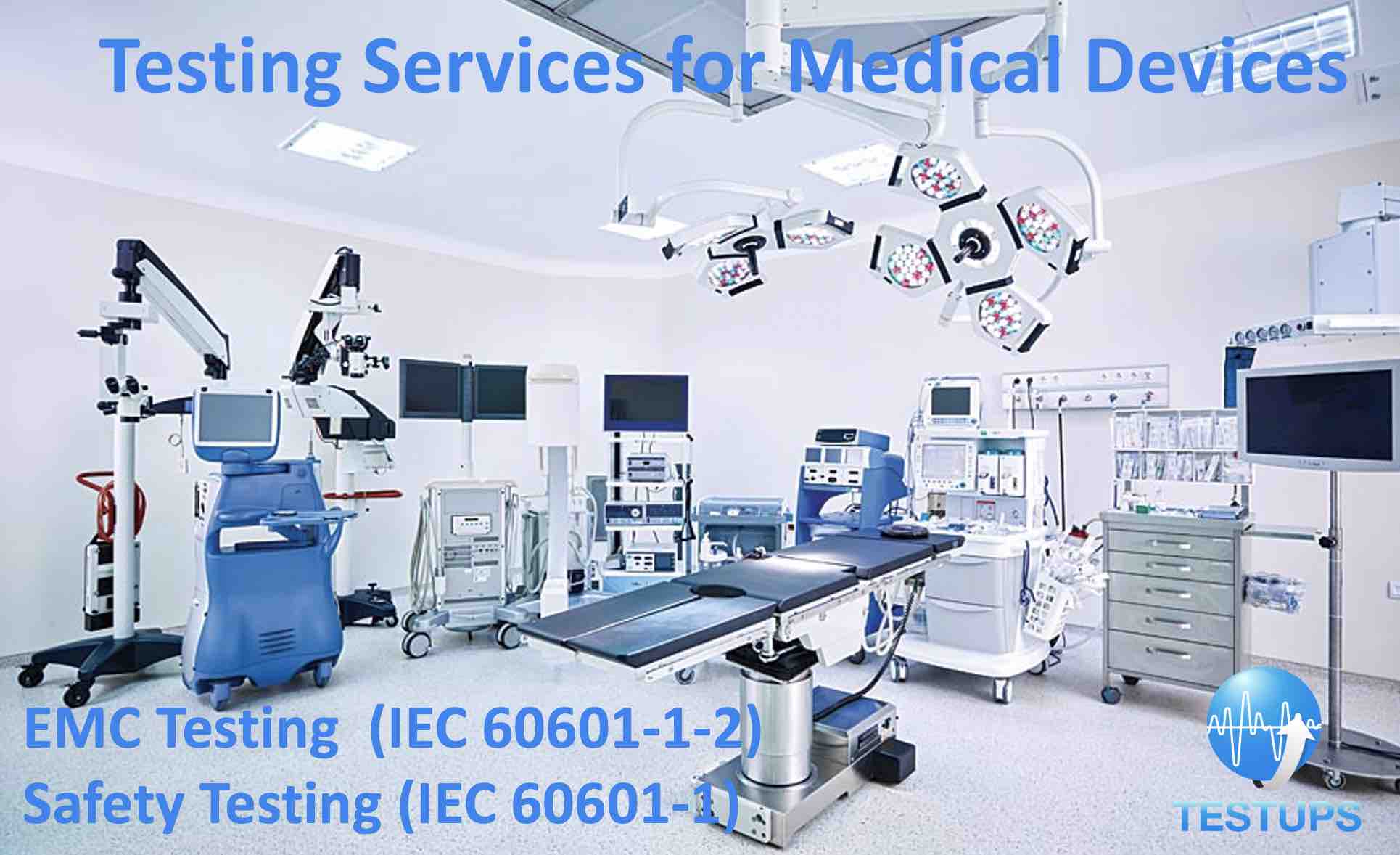
Introduction to IEC 60601-1-2
IEC 60601-1-2 is the collateral standard within the IEC 60601 series that defines the electromagnetic compatibility (EMC) requirements for medical electrical equipment (ME equipment) and medical electrical systems (ME systems). It is a critical part of the regulatory pathway for bringing medical devices to market in the European Union, United States, and most international markets.
The standard ensures that medical devices do not generate electromagnetic disturbances that could interfere with other equipment and that they can operate safely and effectively in the presence of the electromagnetic environment typical of their intended use location. Given the life-critical nature of many medical devices, the stakes for EMC compliance are exceptionally high.
Scope of the 4th Edition
The 4th edition of IEC 60601-1-2 (published in 2014 and widely adopted as the current normative edition) introduced a fundamental shift in how EMC requirements are determined for medical devices. Instead of prescribing a fixed set of test levels for all equipment, the 4th edition integrates EMC requirements with the manufacturer’s risk management process.
Key aspects of the 4th edition scope:
- Applies to ME equipment and ME systems intended for use in professional healthcare facility environments, home healthcare environments, and special environments (e.g., ambulances, military field hospitals).
- Requires manufacturers to identify the electromagnetic environment in which their device will be used.
- Mandates that EMC test levels and pass/fail criteria be determined through a documented risk analysis that considers the device’s intended use, its essential performance, and the electromagnetic phenomena present in the intended environment.
- Covers both emissions (to protect other devices) and immunity (to protect the medical device from disturbances).
Risk Management Approach
The 4th edition’s risk management approach requires manufacturers to perform the following activities as part of EMC compliance:
Step 1: Identify the Intended Electromagnetic Environment
The manufacturer must define where the device will be used (e.g., hospital, home, ambulance) and characterize the electromagnetic environment of that location, including the types and levels of electromagnetic phenomena expected.
Step 2: Determine Essential Performance
Essential performance is a core concept in IEC 60601-1-2. It refers to the clinical functions of the ME equipment whose loss or degradation would result in an unacceptable risk. The manufacturer must identify all essential performance characteristics through clinical risk analysis. EMC testing must then verify that essential performance is maintained during and after exposure to electromagnetic disturbances.
Step 3: Identify Electromagnetic Phenomena
Based on the intended environment, the manufacturer identifies the relevant electromagnetic phenomena (e.g., radiated RF fields, conducted disturbances, ESD, power frequency magnetic fields, voltage dips).
Step 4: Determine Test Levels
The minimum test levels specified in the standard serve as the baseline. However, the risk analysis may indicate that higher test levels or additional tests are needed based on the specific environment and the clinical consequences of device malfunction.
Step 5: Evaluate and Document
The results of EMC testing are evaluated against the defined essential performance criteria. The entire process, from environment identification through test level justification, must be documented in the risk management file.
Emission Requirements
IEC 60601-1-2 specifies emission limits for ME equipment based on CISPR 11 (for industrial, scientific, and medical equipment). The emission requirements ensure that the device does not generate excessive electromagnetic interference that could disturb other medical or non-medical equipment in its vicinity.
Radiated Emissions
| Classification | Limit (quasi-peak, 30 MHz - 230 MHz) | Limit (quasi-peak, 230 MHz - 1 GHz) |
|---|---|---|
| Group 1, Class A | 40 dBuV/m at 10 m | 47 dBuV/m at 10 m |
| Group 1, Class B | 30 dBuV/m at 10 m | 37 dBuV/m at 10 m |
Class B limits apply to equipment intended for use in home healthcare environments or any environment that includes residential areas. Class A limits are permitted for equipment used exclusively in professional healthcare facilities.
Conducted Emissions
| Classification | Limit (150 kHz - 500 kHz) | Limit (500 kHz - 30 MHz) |
|---|---|---|
| Group 1, Class A | 79 dBuV (QP) / 66 dBuV (AVG) | 73 dBuV (QP) / 60 dBuV (AVG) |
| Group 1, Class B | 66 to 56 dBuV (QP) / 56 to 46 dBuV (AVG) | 56 dBuV (QP) / 46 dBuV (AVG) |
Immunity Requirements
The immunity requirements in IEC 60601-1-2 are comprehensive, covering the major electromagnetic phenomena found in healthcare environments. The required test levels differ based on whether the device is intended for professional healthcare or home healthcare use.
Immunity Test Summary
| Test | Standard | Professional Healthcare Level | Home Healthcare Level |
|---|---|---|---|
| ESD | IEC 61000-4-2 | +/- 8 kV contact, +/- 15 kV air | +/- 8 kV contact, +/- 15 kV air |
| Radiated RF immunity | IEC 61000-4-3 | 3 V/m (80 MHz - 2.7 GHz) | 3 V/m (80 MHz - 2.7 GHz) |
| Proximity fields (wireless) | IEC 61000-4-3 | Various levels at spot frequencies | Various levels at spot frequencies |
| EFT/Burst | IEC 61000-4-4 | +/- 2 kV power, +/- 1 kV signal | +/- 2 kV power, +/- 1 kV signal |
| Surge | IEC 61000-4-5 | +/- 1 kV line-to-line, +/- 2 kV line-to-earth | +/- 0.5 kV line-to-line, +/- 1 kV line-to-earth |
| Conducted RF immunity | IEC 61000-4-6 | 3 V rms (150 kHz - 80 MHz) | 3 V rms (150 kHz - 80 MHz) |
| Power frequency magnetic field | IEC 61000-4-8 | 30 A/m (50/60 Hz) | 30 A/m (50/60 Hz) |
| Voltage dips and interruptions | IEC 61000-4-11 | Per standard voltage levels | Per standard voltage levels |
The 4th edition also added specific requirements for immunity to RF fields from wireless communication devices (e.g., mobile phones, WLAN, Bluetooth) used in close proximity to medical equipment. These are tested at defined spot frequencies with elevated field strengths.
Essential Performance During Immunity Testing
During immunity testing, the ME equipment must maintain its essential performance. This means:
- Safety-related functions must not be compromised.
- Clinical functions identified as essential must continue to operate within their specified limits.
- If temporary degradation occurs (analogous to Performance Criterion B under IEC 61000-4-x), the device must recover automatically without operator intervention, and the degradation must not pose an unacceptable clinical risk.
The manufacturer defines what constitutes acceptable performance during immunity testing, based on the risk analysis documented in the risk management file.
Risk Analysis Documentation
IEC 60601-1-2 requires extensive documentation to support the EMC compliance claim:
- Identification of the intended electromagnetic environment
- Identification of all essential performance characteristics
- Justification of emission classification (Class A or Class B)
- Justification of immunity test levels (baseline or enhanced)
- Summary of the risk management process linking electromagnetic phenomena to potential clinical hazards
- EMC test plan and test results
- Declaration of the EMC performance of the device in the accompanying documents (user manual)
Regulatory bodies such as notified bodies in the EU and the FDA in the United States review this documentation as part of the device approval process.
How TESTUPS Can Help
TESTUPS provides comprehensive EMC testing and consultancy services for medical device manufacturers seeking compliance with IEC 60601-1-2. Our team assists with risk analysis for EMC, identification of essential performance criteria, test plan development, and execution of the full suite of emission and immunity tests required by the 4th edition. We also support manufacturers in preparing the documentation needed for regulatory submissions, including risk management files and EMC declarations. Contact TESTUPS to discuss your medical device EMC compliance strategy and testing requirements.
Need Expert EMC Assistance?
TESTUPS provides complete EMC solutions — from test equipment and anechoic chambers to certification services. Contact our team for tailored support.